

Flower tattoos don’t have to be detailed masterpieces to feel meaningful. In fact, simple flower tattoos often carry the most charm. Clean lines, gentle curves, and minimal detail can create designs that feel timeless, personal, and easy to wear every day.
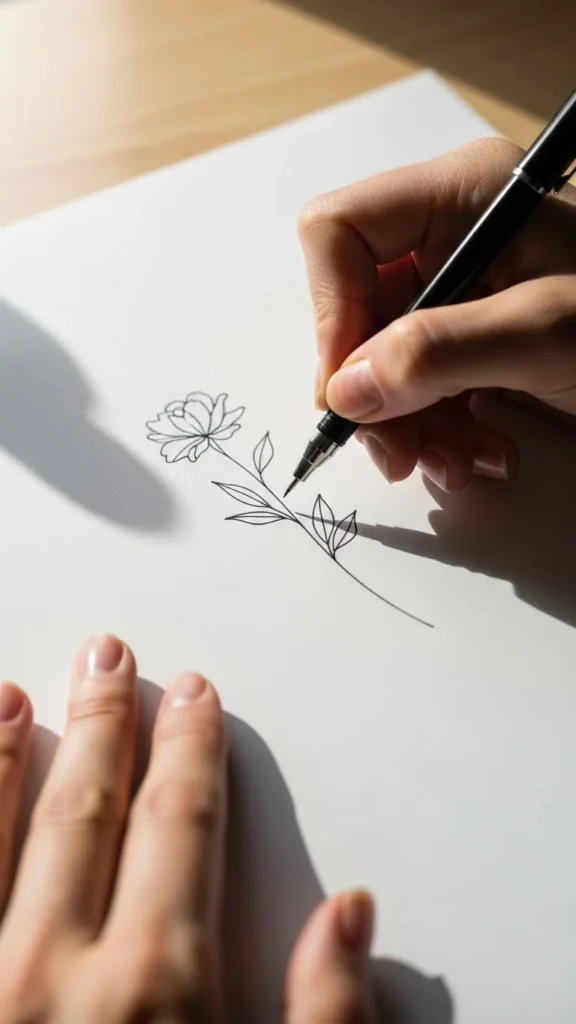
Whether you’re sketching for fun, practicing tattoo-style drawing, or planning your first floral tattoo idea, this guide will walk you through the process step by step—without overcomplicating things.
Why Simple Flower Tattoos Are So Popular
Simple flower tattoos work because they balance beauty and restraint. They’re expressive without being loud and soft without fading into the background.
Here’s why people love them:
- They age well due to clean, minimal lines
- They suit almost any placement (wrist, ankle, shoulder, collarbone)
- They’re beginner-friendly to draw and design
- They can represent growth, love, calm, or memory without extra symbols
If you’re new to drawing tattoos, flowers are the perfect place to start.
Start With the Right Flower Shape

Before adding details, choose a flower that naturally works in a simplified style. Some flowers are easier to reduce into basic shapes than others.
Great beginner-friendly flower choices:
- Daisies (round center, simple petals)
- Tulips (smooth, closed shapes)
- Wildflowers (loose and organic)
- Cherry blossoms (soft petals, gentle curves)
- Simple roses (spiral center, minimal outer lines)
Tip: Think in shapes first, not details. A circle, oval, or teardrop can form the base of most flowers.
Draw the Flower Using Simple Lines
This is where the magic happens. Simple flower tattoos rely on line confidence, not complexity.
Follow this easy process:
- Lightly sketch the main shape (circle or oval)
- Add petals using smooth, single strokes
- Keep lines open and breathable—don’t crowd them
- Avoid shading at first; focus on clean outlines
Helpful drawing tips:
- Use one consistent line weight
- Don’t redraw lines too many times
- Let imperfections stay—they add character
- Stop early instead of overworking the design
If it looks finished sooner than expected, that’s usually a good sign.
Add Soft Details Without Overloading the Design

Once the main flower is drawn, you can add just enough detail to give it personality.
Soft detail ideas:
- A tiny dot or two in the flower center
- Short, curved lines at petal bases
- One thin stem with a gentle curve
- A single small leaf instead of many
What to avoid:
- Heavy shading
- Thick outlines mixed with thin ones
- Too many leaves or overlapping petals
Simple flower tattoos shine when there’s space to breathe.
Think About Tattoo Placement While Drawing
Even if you’re just sketching, placement matters. A design that looks great on paper should also flow naturally on skin.
Keep placement in mind by:
- Drawing vertically for wrists, forearms, ankles
- Using small, centered designs for behind-the-ear or finger areas
- Keeping curves gentle for collarbone or shoulder placements
Ask yourself:
- Will this still look clear when smaller?
- Does the shape follow the body’s natural lines?
- Would this design still work without extra details?
If the answer is yes, you’re on the right track.
Practice Variations to Find Your Style
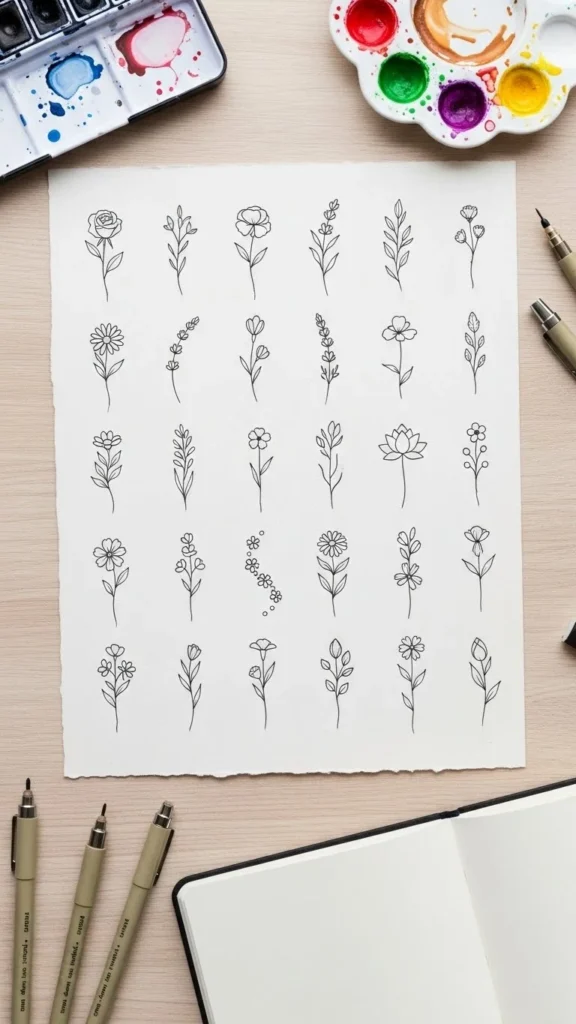
One of the best ways to improve is repetition—with variation.
Try this exercise:
- Draw the same flower five times
- Change only one thing each time (petal count, stem curve, size)
- Compare which version feels most balanced
Over time, you’ll notice patterns in what you like. That’s how a personal style develops.
Keep Your Designs Tattoo-Friendly
A beautiful drawing isn’t always a good tattoo. Keep these tattoo-friendly rules in mind:
- Avoid ultra-thin lines that may fade quickly
- Don’t rely on tiny details too close together
- Make sure the design is readable from a short distance
- Simplicity improves longevity on skin
When in doubt, simplify one more time.
Final Thoughts: Let Simple Flowers Speak Softly
Drawing simple flower tattoos isn’t about perfection—it’s about soft expression. With just a few lines, you can create designs that feel personal, calming, and meaningful.
Start small. Trust clean lines. Let the flower’s shape do the work.
If this guide helped you, save it for later and keep practicing. Your next simple flower design might be the one that truly blooms.

Leave a Reply